Glossary
What is burial vault?
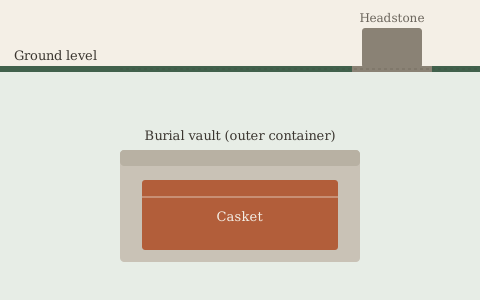
A burial vault is a sealed outer container, usually concrete or reinforced material, that encloses the casket in the grave. It supports the soil above and helps keep the ground level. Many cemeteries require a vault or a grave liner.
Cemeteries often require an outer burial container so the ground does not settle and sink over the casket as the years pass. A fully sealed vault is one option; a simpler, unsealed grave liner is another.
Vaults are made from reinforced concrete, sometimes lined with metal or plastic, and are built to bear the weight of soil and maintenance equipment above. A sealed vault is marketed as keeping water and earth out; a grave liner simply covers the top and sides. Neither preserves a body indefinitely, and no vault is needed for the body's sake.
Vaults are a cemetery requirement, not a legal one — no US law requires a casket to be enclosed in a vault. The FTC Funeral Rule entitles you to an itemized price list, so you can compare vault and liner options before buying, and you may buy one from a third-party seller without a surcharge from the funeral home.
Because the vault and its installation are among the larger line items in a traditional burial, confirming the cemetery's actual requirement is one of the simplest ways to control the cost. Where a vault is not required — for example, in many natural or green burial grounds — you can skip it entirely.
Related terms
Grave liner
A grave liner is a basic outer burial container that covers the top and sides of a casket in the ground. Like a burial vault, it keeps the ground from settling, but it is unsealed and usually less expensive than a fully sealed vault.
Casket
A casket is the container, traditionally rectangular with a hinged lid, in which a body is buried or sometimes cremated. Caskets are made from wood, metal, or other materials and vary widely in price depending on construction and finish.
Interment
Interment is the act of placing a body or cremated remains in their final resting place, most often by burying a casket in the ground or entombing it in a crypt. The cemetery fee to open and close the grave is commonly called the interment charge.
General Price List
A General Price List, or GPL, is the itemized list of prices a funeral home must provide under the FTC Funeral Rule. It lets you see the cost of each good and service separately so you can compare providers and choose only what you want.
See also
Common questions about Burial vault
Sources
Explore with AI
This definition is general information, not legal or financial advice. Laws and prices vary by state and provider. See our editorial standards.